
NAT Public Website Redesign
My Role
UX Designer and Content Strategist. I contributed Figma page layouts, user personas, and a full Content Specification document covering all content zones across the redesigned public-facing NAT website.
The Project
NAT's public-facing website needed a redesign to better communicate who NAT is, what it does, and how different audiences can get involved. Unlike the member portal redesign (which serves existing NAT members), this project was about the first impression NAT makes on the outside world — partners, professionals, and builders who may never have heard of NAT before landing on the site.
My work focused on two key sections:
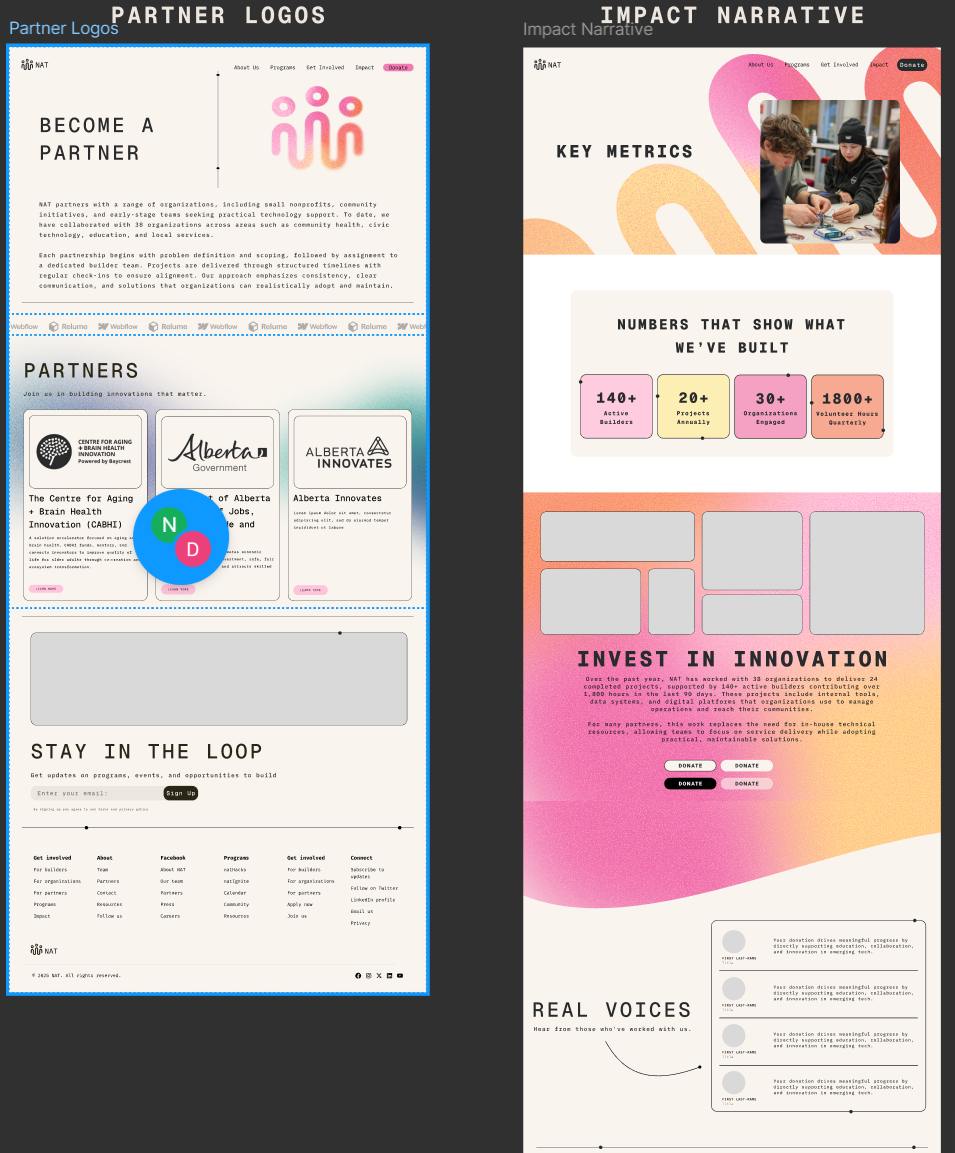
About — pages sharing NAT's partner logos and impact narrative, communicating credibility and reach to prospective stakeholders
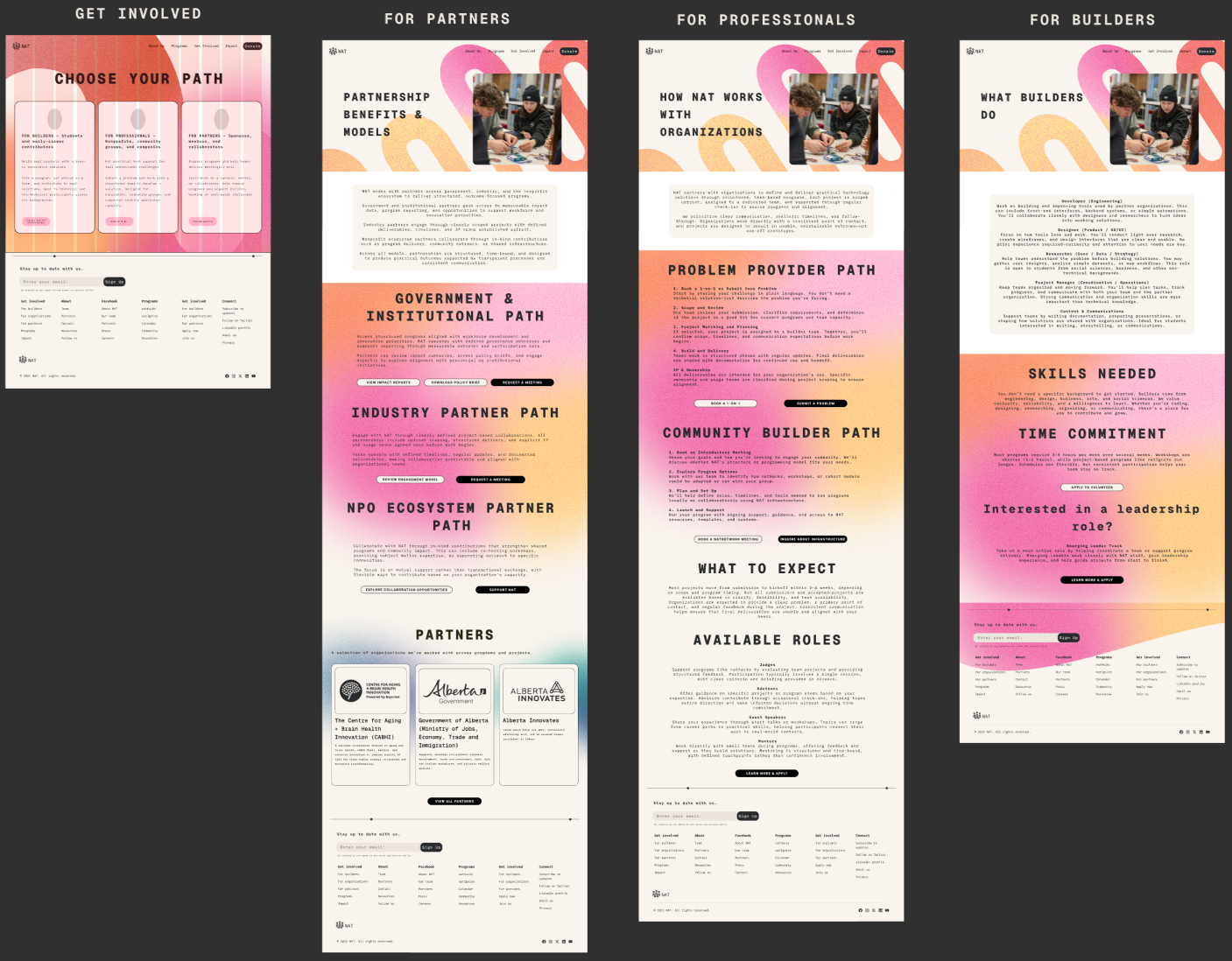
Get Involved — three audience-specific pages tailored to Partners, Professionals, and Builders, each with a distinct value proposition and call to action
Skills Demonstrated
UX design · Figma · User personas · Content strategy · Content specification · Audience segmentation · Developer handoff · Information architecture
User Personas.
Before designing the pages, I developed user personas to ground the design decisions in real audience needs. NAT's public website serves meaningfully different visitors — a corporate partner evaluating a sponsorship opportunity has completely different information needs than an early-career professional looking to get involved in applied tech projects. The personas made those differences explicit and gave the content strategy a user-centered foundation.
Content Specification Document.
I authored copy for webpages in a Content Specification document covering all content zones across the redesigned website — defining the purpose, messaging, tone, and content requirements for each section before design work began. This ensured that page layouts were built around content intent rather than retrofitting copy into existing designs.
This is the kind of upstream work that prevents expensive rework downstream: when developers and designers know what each zone needs to communicate and why, decisions at every subsequent stage are faster and more aligned.
Figma Page Layouts.
Using the content specification as a foundation, I built medium-fidelity Figma layouts for the About and Get Involved pages. Key design decisions included:
Partner logos section — structured to signal credibility quickly to first-time visitors without requiring them to read dense copy
Impact narrative — laid out to tell a story progressively, leading with the most compelling outcomes before supporting detail
Get Involved pages — each page structured around its specific audience's primary question: "What's in it for me, and what's the first step?"
Status.
Designs have been handed off to the development team and the build is currently in progress.
What I'd Do Differently
With more time, I would have validated the persona assumptions with actual interviews or surveys of each audience type before finalizing the content spec. The personas were built from what we knew about NAT's existing stakeholders — which is a reasonable starting point — but primary research with prospective partners, professionals, and builders would have surfaced needs and language we might not have anticipated.